Spring in Ayurveda is considered a kapha dosha predominant season -a time when the world thaws, moisture rises and the body naturally begins to detoxify. After winter’s heaviness, we often feel sluggish, congested or mentally foggy. Ayurveda sees this not as a problem but as an invitation: spring is the ideal moment to lighten, cleanse, and reset. This study of the seasons is called ritucharya and is a major focus in Ayurveda.[1] Modern research supports this view in finding that seasonal changes in day length can suppress or enhance our immune function.[2]
It is clear that as the seasons change, our bodies also require a different diet and lifestyle to stay balanced (or dinacharya). Below are simple, Ayurvedic tips to help you feel clear and balanced as the season shifts.
Eat a light kapha balancing spring diet
Spring foods should be light, warm, bitter, pungent, and astringent, the tastes that naturally reduce kapha. These tastes open the channels of elimination, clearing excess mucus and moisture from the body.
What to favour
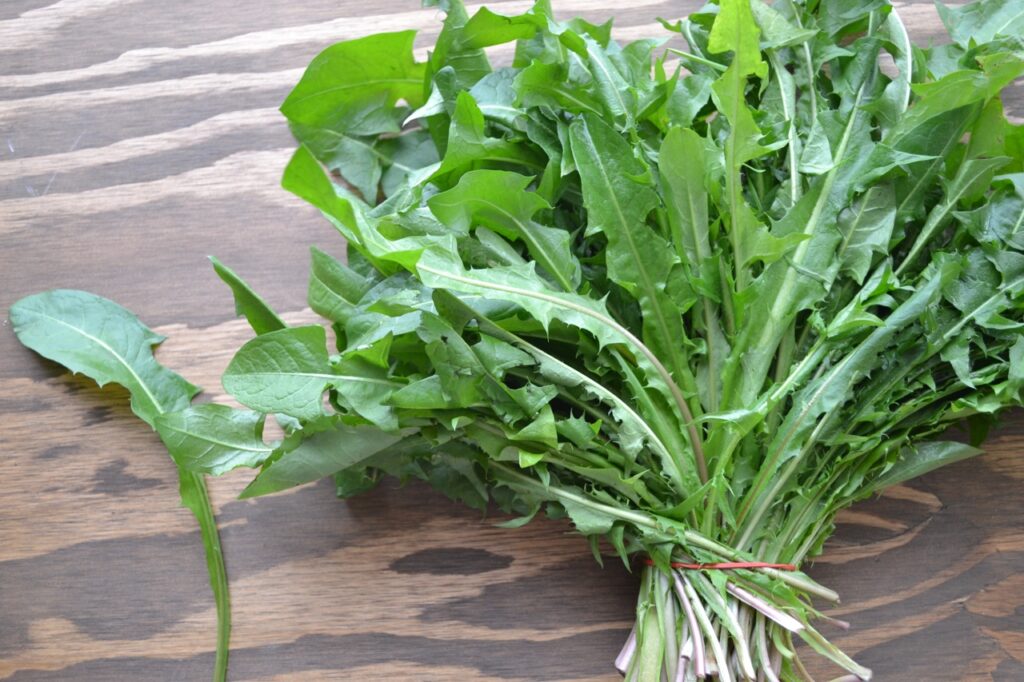
- Bitter greens: dandelion leaves (pictured above), rocket, kale, mustard greens
- Spring vegetables: asparagus, radish, beet greens, wild garlic
- Legumes: lentils, green and yellow mung dal, chickpeas
- Grains: Lighter grains such as quinoa, millet and barley are all kapha reducing
- Spices: ginger, black pepper, turmeric, cumin, mustard seed
- Fruits: berries, apples, pears (preferably cooked or stewed early in the season)
- Raw honey clears mucous and kapha due to its heating, drying and channel clearing effect
- Gentle herbal teas: ginger‑tulsi tea; cumin‑coriander‑fennel tea (CCF); lemon‑ginger tea with a pinch of black pepper. These teas kindle agni (digestive fire) and help melt kapha’s heaviness.
Ideal spring meals
- Take a cup of hot water first thing to stimulate digestion and clear any mucus
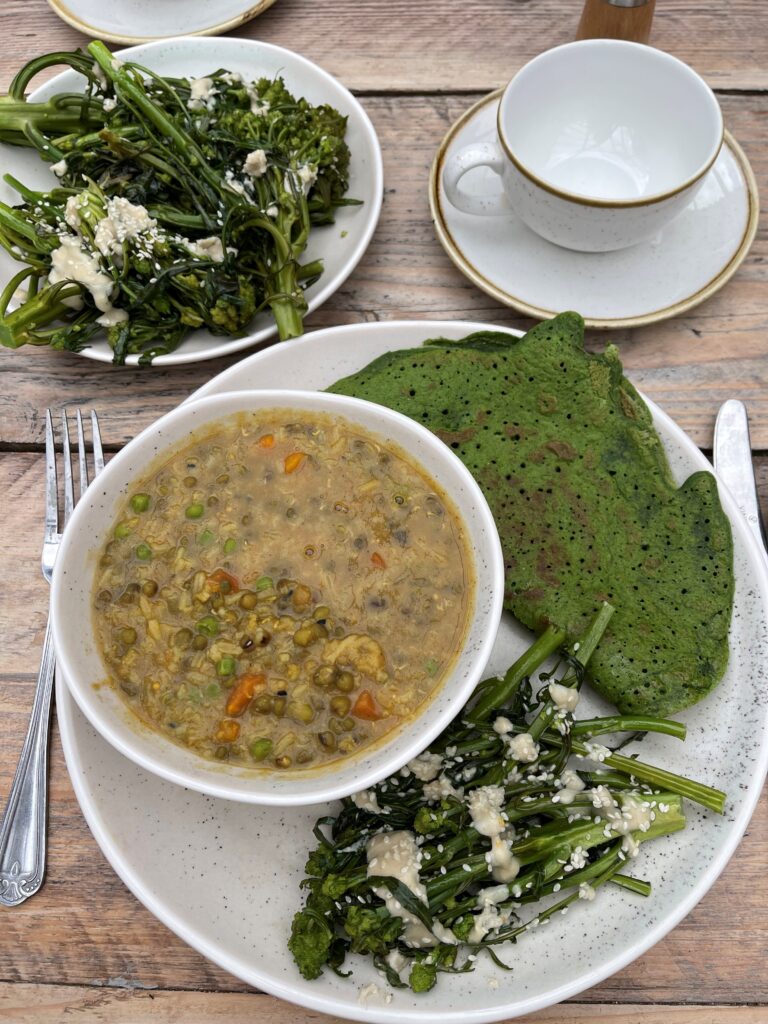
- Kitchari with cumin, turmeric, ginger and steamed leafy greens
- Light vegetable soups and broths
- Stir‑fried greens with warming spices
- Stewed apples with cinnamon and ginger in the morning
What to Reduce
- Dairy (especially hard cheese and yogurt)
- Heavy meats
- Cold foods and iced drinks
- Wheat and refined flour
- Excess oils and sweet tastes
These foods increase kapha’s heaviness and can worsen congestion, allergies and sluggish digestion.
Helpful spring herbs
Ayurveda’s spring herbs focus on clearing mucus, stimulating digestion, and supporting detoxification. Some of our fave spring herbs are:
- Trikatu (ginger, black pepper, long pepper): Enhances digestion, metabolism and clears toxins
- Triphala (combination of three wonderful rejuvenative tonifying herbs which pacify all three doshas.
- Turmeric Supports liver detoxification and reduces inflammation
- Tulsi (Holy Basil) Clears respiratory congestion and supports immunity
- Neem: Bitter, cleansing, excellent for skin and lymphatic detox
- Chywanprash is a delicious Ayurvedic herbal jam to boost immunity and strengthening the lungs
- Forage for wild garlic, nettle, cleavers (sticky willy), dandelion leaves which are all rich in the bitter, pungent and astringent tastes. Nature provides exactly what we need at the right time!
Spring lifestyle tips
Lifestyle is just as important as diet in Ayurveda, especially in spring, when kapha’s qualities of heaviness and inertia can dominate.

- Move daily (preferably in the morning) to clear stagnation and lifts mood. Kapha is slow and steady, so spring is the perfect time for: brisk walking; Yoga flows with invigorating backbends, twists and warming sun salutes; get dancing; light jogging on grass to protect joints.
- Wake up early: Kapha time of day is 6–10 AM. Waking before 6 helps avoid morning heaviness and grogginess.
- Try dry brushing or use silk gloves for a gentler approach (garshana): Stimulates lymph, exfoliates skin, and boosts circulation. Follow with a warm shower.
- Try kappalabhati pranayama (shining skull breath) to invigorate the respiratory system (ask your yoga teacher to show you if you’re not familiar with this powerful pranayama)
- Seek sunlight: Natural light (especially in the morning) helps regulate circadian rhythms and supports immunity, especially after winter’s darkness.
- Spring clean your space: Ayurveda sees your environment as an extension of your inner world. Decluttering helps reduce mental kapha and invites fresh energy.
Gentle spring cleansing
Spring is the ideal season for a light Ayurvedic cleanse, such as:
- A 3–7 day kitchari (rice and mung dhal risootto style dish) mono diet- see recipe below
- Reducing sugar, dairy, and processed foods
- Drinking warm water and herbal teas throughout the day
- Eating your largest meal at midday
- Taking at least 200 steps after each meal, hopefully a brisk walk
This supports the body’s natural detoxification processes without harsh fasting.
Closing thoughts
Spring is a season of renewal. When we align our habits with nature’s rhythms, lighter foods, warming spices, invigorating movement, we feel clearer, brighter, and more energized. Ayurveda doesn’t ask for perfection; it invites us to listen, adjust, and honour the season we’re living in.
Kitchari recipe (rice-mung stew, pictured above)
Kichari, rice-mung stew (or porridge), is wonderfully light on digestion yet tasty and satisfying. It is often given to people who are ill or recovering from illness, like an Ayurvedic ‘chicken soup’. If you’d like a follow-along video to make this, here is Kate demonstrating how to make it at the Wise Things Festival.
Our recipe for 3 servings
- 75g yellow split mung dal (ideally soaked for few hours)
- 150g white basmati rice
- 1½ tbsp ghee (or coconut oil)
- ¼ tsp black mustard seeds (optional)
- ½ tsp cumin seeds
- ½ tsp fennel seeds (or powder)
- ½ cm fresh ginger chopped
- ½ tsp turmeric powder
- 1 tsp coriander powder
- 1 pinch hing (optional)
- 1 litre boiled water
- ¾ tsp rock salt
INSTRUCTIONS
- Wash mung dal and rice till water runs clear, set aside.
- Warm ghee/coconut oil on a medium heat.
- Add mustard, cumin and fennel seeds and cook until they pop (few minutes). If using fennel powder instead, add that in the next step.
- Add fresh ginger and the powders (turmeric, coriander and hing). Stir briefly.
- Add the rice and mung, stir constantly.
- Add freshly boiled water, turn up heat and cover.
- When the water comes to a boil, stir in the salt, reduce heat, cover, and simmer for about 40 minutes or until there is only a little water left and it has a vegetable stew / soupy porridge consistency. Add more water towards the end if it gets too dry. Stir occasionally.
If eating with vegetables have them:
- Simply steamed
- Or sautéed with ghee and spices (making a tasty curry type dish)
- Or added to the kichari (about halfway through cooking).
- For example: asparagus, carrots, celery, green beans, squash, sweet potato or courgette. Spinach, kale etc also work well added to the kichari.
References:
[1] Thakkar, J., Chaudhari, S. and Sarkar, P.K., 2011. Ritucharya: Answer to the lifestyle disorders. Ayu, 32(4), p.466. Ritucharya: Answer to the lifestyle disorders (nih.gov)
[2] Nelson, R.J. and Demas, G.E., 1996. Seasonal changes in immune function. The Quarterly review of biology, 71(4), pp.511-548. Seasonal changes in immune function – PubMed (nih.gov)
0 Comments