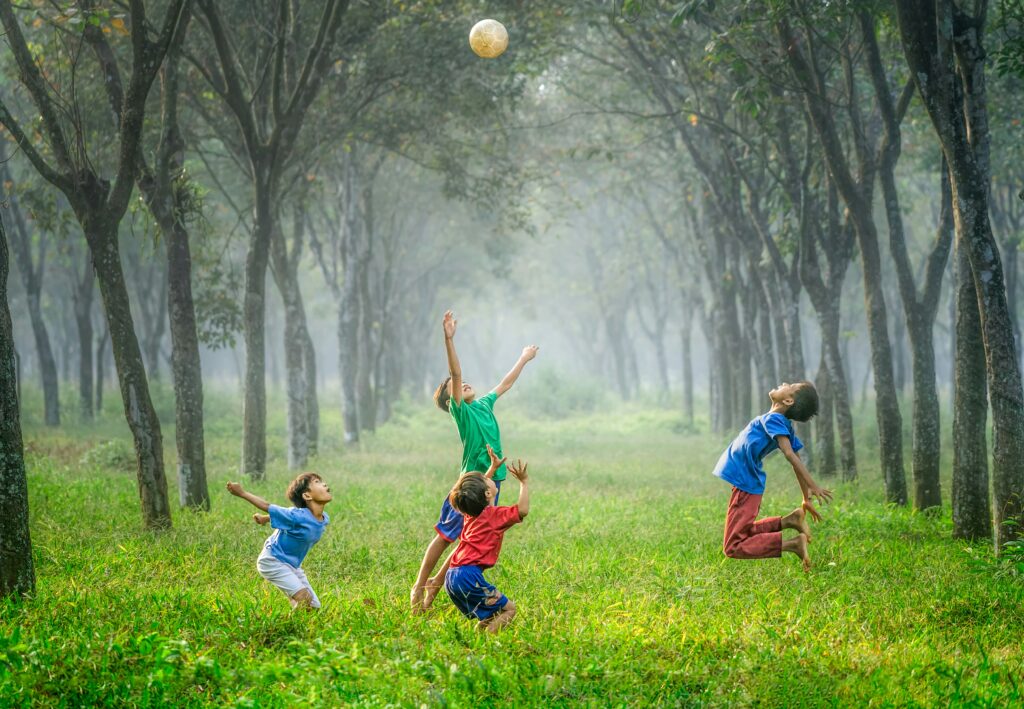
It’s clear that children are quite different. Some are good sleepers, others need sensitive handling at bed-time and everything needs to be just so. Some are good eaters, with regular hunger- others are more variable and picky. Some love team sports whilst others are just not that interested. Just as with adults, the Ayurvedic doshas can provide a useful insight into keeping children happy, healthy and inspired.
Babies aren’t born with a user’s manual, but knowing which dosha, or mind body type they are is a good place to start. This can provide profound insight and help support a well-balanced childhood, whilst also saving energy in knowing what to focus on. It can help anticipate what sort of emotional behaviour to expect and what the potential triggers might be for upsets. It can also provide an insight into what sort of activities your child will enjoy, and foods will serve their body type.
Like adults, children have all three doshas, but it’s the particular combination of them that makes them who they are. Most children have one or two doshas which are more dominant and determine what your child looks like, their mental characteristics and their personality. It’s likely your child shows some characteristics of each of the following ‘snapshots’ but that one or two doshas will resonate more
The vata child
The vata child is dominant in the air and ether elements, which manifest in a light, slender body frame with dry skin. These children tend to feel the cold, and may have cold hands and feet. They are fast in nature- be it thought, speech or physical movement- with a restless busy nature. They are creative and may often get absorbed in their own world. At school, they buzz around the classroom, chatting and finding it hard to sit still and be quiet. Long periods of focus can be challenging for the vata child as they have active minds and are distracted by what is going on around them. They may also tend to day-dream but their minds are full of ideas and inventions. Vata kids tend to do well at school but may be prone to worry and anxiety as they think a lot. So, they may be chatty in a small group but speaking in front if the whole class can make them nervous. They work quickly but may rush a little and make silly mistakes. They take in information quickly, but may not retain it for very long. They may have sensitive digestions and be prone to constipation Be prepared for them to be sometimes starving sometimes not as their appetites can be erratic. Their dry skin may also be prone to eczema. As with vata adults, vata children are often light sleepers and may wake in the very early hours and not be able to get back to sleep. To sum up, vata children are quick, sensitive with variable appetite and sleep habits. They can be quite high-maintenance and need gentle handling at times. When they grow up, they tend towards creative professions, such as being an artist, actor, dancer or scientist.
Tips for caring for a vata child:
- Try and stick to a good routine of mealtimes and bed time
- Warm, nourishing meals will help keep them grounded
- Provide warming, soothing teas with herbs like ginger and chamomile
- Provide lots of gentle reassurance to keep them cheerful
- Encourage the habit of checking their home work for silly mistakes
- Check they have a daily movement in case of constipation
- Keep them warm and cosy in the winter months
- Regular warm oil massage is soothing and calming and helps dry skin too
The pitta child
The pitta child is dominant in the fire and water elements, which manifests as a regular body frame. As this body-type carries a lot of heat by nature, it’s easy for these children to get ‘hot and bothered’ and red in the face on a hot summer’s day. Their skin is likely to be sensitive to the sun, with freckles and prone to rashes. Looking at character, these children tend to a more competitive nature, and enjoy leadership positions from a young age. They tend to be athletic, loving sports but they may not make the best losers. They are very organised and confident at both home and school, with sharp, intelligent minds. They also enjoy being the centre of attention and are good fun to have around. Pitta children like to get things right, and may tend to perfectionism and be quite self-critical at times. They tend to do very well at what they choose to do, but parents need to check they don’t make too many demands on themselves. Physically, they have strong appetites and need regular, square meals or they are prone to irritation. Try to get their meals on the table in good time or there may be trouble! They tend to sleep well, if for shorter periods, and are ready to go in the morning. Generally, pitta children are more robust than the more sensitive vata type. However, due to their ‘hot’ nature, they may be prone to sudden outburst of anger or bad sportsmanship. When they grow up, they may end up being the boss of their own business, a professional athlete or in some form of leadership position.
Tips for caring for a pitta child:
- Be a good role model for how to lose gracefully
- Encourage them to listen to others and not always get their own way
- Make sure satisfying meals are served on time
- Provide cooling teas with herbs like mint and rose
- Keep them cool, calm and well-hydrated in summer
- Show them that things can’t be perfect all the time- we all learn from mistakes
The kapha child
The kapha child is more dominant in the water and earth elements, manifesting in a more well-built and solid body-frame than the other two types. Compared to vata’s dynamic nature, these children are slower and steadier. They move more slowly and methodically, with no wasted effort. They are also slower to learn by nature, but once they have understood a concept they have it for life. The fast, busy pace of most class rooms may not serve these children as well as the other types, but once older they are able to do well in any field of activity. These children have a calm and peaceful manner about them, and they are well-liked and are very loving in return. They tend to be good, heavy sleepers- a blessing for parents when they are small babies! As they get older, they may take a while to get going in the morning. Physically, kapha children are more prone to mucus conditions and coughs and colds. There may also be a tendency to weight gain due to a slower metabolism, especially with foods that are too heavy and with insufficient physical activity. It’s important to keep them energised and motivated. When they grow up, kapha children may be drawn towards the more caring professions, such as healthcare and teaching.
Tips for caring for a kapha child:
- Encourage stimulating forms of exercise that are both fun and involve teams
- Minimise cold, heavy, sweet foods
- Provide warming teas with herbs like ginger and cinnamon
- Keep them warm in the winter months
- Provide lots of physical and mental stimulation

Fun dosha quiz for children
Reach these out and mark total scores for V, P and K to get a flavour of what constitution the child might be:
- Which of these trees best represents your body type?
V: Light, slender body-frame, prone to dry skin.
P: Regular body frame, prone to red, sensitive skin
K: Well-built and solid body-frame
- In the classroom, which one is most like you?
V: You are chatty but speaking in front if the whole class can make you nervous.
P: You’re confident, put your hand up first and like answering questions.
K: You take a bit longer to think of the right answer and wish the teacher gave more thinking time
- When it comes to eating:
V:I am sometimes hungry but sometimes not hungry at mealtimes
P: I am always hungry at mealtimes and other times too!
K: Sometimes I don’t feel like eating breakfast as I’m just not hungry first thing
- When it comes to homework:
V: I do it quickly, but can rush and make silly mistakes
P: I am very organised, on time and have made sure it’s perfect
K: I am unmotivated about doing my homework
- How do you sleep?
V: I sometimes find it hard to get to sleep, and wake up in the night
P: I sleep well, and feel full of beans when I wake up
K: I need lots of sleep and can take a while to get going in the morning
- What would you like to do when you grow up?
V: I’d like to be creative and share my great ideas- scientist, inventor, dancer, artist
P: I’d like to set up my own company and be the boss
K: I’d like to care for people, maybe in healthcare or teaching
Mainly vata (V)
You are quick to talk and move and your parents and teachers may often have to ask you to settle down and be quiet! You are super creative, artistic and full of ideas. You may even get lost in your thoughts and daydream lots. You are a light sleeper and wake up easily, especially if something is on your mind. You feel the cold and like a wooly jumper on in winter.
Top tip to feel your best: Ask for regular meal-times and bed-times.
Mainly pitta (P)
You enjoy school, especially Maths and Science, and are happy being the centre of attention. You are quite competitive in games and sports. You like to take charge and lead a group. You also like to get things perfect and can be a little hard on yourself if you make a mistake. You can get quite hot and bothered in the summer and may have pink cheeks and freckles.
Top tip to feel your best: Keep cool in summer with plenty of water to drink
Mainly kapha (K)
You are calm, peaceful and a make a loyal friend- always ready with a hug. You are also a good team player and your parents or teacher might describe you as a ‘quiet achiever’. You are a very good sleeper but can take a while to get going for school. You also don’t like cold, damp weather which can make you feel a bit sluggish.
Top tip to feel your best: Get involved in a team game at break-time and wear a wooly hat outside in the winter months.
Why not join our accessible ‘Introduction to Ayurveda’ course to be able to apply Ayurveda’s timeless to your family and frineds?
“This is the first course that I can remember that really supports an individual’s development and seeks to help them grow.” MP (Introduction to Ayurveda)
0 Comments