“When diet is wrong medicine is of no use. When diet is correct medicine is of no need” (Ayurvedic proverb)

It’s hard to ignore the fact that humans have been eating seasonally until a few decades ago, and that health depends greatly on such a seasonal diet. Increasing evidence suggests that soil microbes, as well as those around plant roots also change with each season (1). Ayurveda sees our digestive fire is much higher in winter. This may appear contradictory but in cold weather the body retains heat around the core, where the digestive system lies. We need heavier foods and are meant to put on a little weight. If too little food is eaten to keep the fires adequately stoked, there is a danger of the body’s digestive fire burning up the body’s tissues.
By eating what nature offers up with the seasons, you satisfy your natural cravings and give your body what it needs for that season. You remain healthy, strong and resilient, without succumbing to the usual ails of the season. The ‘healthy’ diet as seen by most people today – low fat, low carbohydrate and salads – may work well in spring but not sell well in the colder months when we need the opposite qualities in our food; oiliness, heaviness (without being indigestible) and warmth.
Which type of food is best for winter?
According to Ayurveda, there are six tastes of foods – sweet, salty, sour, bitter, pungent, and astringent. We recommend the following for winter diets:
Sweet, sour and salty: The tastes which nature provides in winter, and which we need, are predominantly sweet (eg: complex carbohydrates) and salty. We also need the sour taste which can come from small amounts of naturally fermented foods used to tide us through the winter. The bitter and astringent tastes from green leafy plants are rarer and pungent flavours are less in evidence. We still need some of these but in smaller amounts as too much can make the body cold and dry.
Warm food: This is warm in temperature and in quality; soups, stews, risottos, casseroles, cooked food providing physical warmth and herbs and spices helping warm up the body with their thermo-regulating properties. Use as many herbs and spices in your winter cooking as you can.
Oily food: cook with plenty of organic oils such as ghee, coconut oil and virgin olive oil. Drizzle over unrefined oils such as flax, sesame and walnut to steamed vegetables and other foods;. [Do not cook with virgin oils and do not use poor qulaity refined vegetable oils]
Seasonal vegetables are ideal
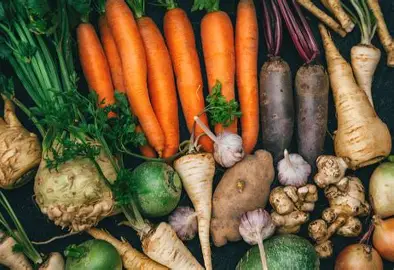
These are predominantly root vegetables whose starchy nature lends them a naturally sweet taste and a heavier, nourishing effect. Ordering a weekly season veg box is a good way to ensure you’re eating the right things such as:
- Beetroots
- Celeriac
- Jerusalem artichoke
- Parsnips
- Potatoes (peeled, with oil and spices)
- Swede
- Sweet potatoes
- Turnips
- Winter squash
There are also a few greener, bitterer vegetables around. We need some of these as we always need all 6 tastes in our meals but in the winter, we need less of this taste.
- artichokes (globe)
- brussels sprouts
- celery
- fennel
- kale
- cabbage (with oil and spices)
- cauliflower (with oil and spices)
And we can have moderate amounts of the pungent vegetables available at this time of year:
- Shallots
- Leeks
- Horseradish
- Grainy seed mustard
There are a couple of seasonal fruits, best eaten cooked and warm such as poacher pears or apple crumble:
- Apples
- Pears
Plenty of protein
Protein is heavy and grounding, along with generally having a sweet taste. Winter is the season where we can digest and indeed we need more protein.
- Small amounts of meat and fish can be good in winter if you eat it. Ayurveda favours chicken, turkey, duck, goat, venison and fish.
- Eggs (organic and free range best)
- Nuts and seeds
- Avocado
- Dairy, especially warm spiced milk and fresh cheeses (with added black pepper to aid digestion)
- Yellow mung, with less focus on the other pulses during the winter
Lots of wholegrains
- Lots of wholegrains such as rice, oats, spelt, rye, barley, quinoa, millet, corn, amaranth, buckwheat (not modern wheat due to indigestibility)
Digestive capability increases so you might want to eat more
As our digestive fire increases in the winter, you can eat more if your body is asking for it. If you need it, you will naturally build up a little healthy reserve in the body which will then fall away in spring. So now is definitely not the time to any form of cleansing, detoxing or ‘lightening’ regimen. Digestive spices that can be especially helpful when we need to eat heavier food. These work gently but powerfully to enhance your own digestive abilities. Many herbs and spices re now being shown to have a prebiotic effect too, such as ginger, rosemary, black pepper, cinnamon and oregano, while also inhibiting pathogenic bacteria (2). Ayurveda also favours liberal use of cardamom, cumin, fennel and turmeric in cooking and herbal teas.
And we look forward to spring
Moving from winter into spring, kapha dosha naturally increases. Nature, once again, provides perfect foods for this with lots of green vegetables and a light, bitter, astringent and pungent diet. Jo gets busy foraging for nett;es, wild garlic, cleavers and dandelion which all provide the exact tastes we need after winter (below). Isn’t our interconnectedness with nature wonderful?

References:
- The 3-Season DietSolving the Mysteries of Food Cravings, Weight-Loss, and Exerciseby John Douillard, Harmony Books, 2000. New York
- Lu, Q.Y., Summanen, P.H., Lee, R.P., Huang, J., Henning, S.M., Heber, D., Finegold, S.M. and Li, Z., 2017. Prebiotic potential and chemical composition of seven culinary spice extracts. Journal of food science, 82(8), pp.1807-1813
0 Comments